

How to Plan Your Own Funeral: A Comprehensive Guide




What do you picture your funeral to be like?
It’s not a question we think about often, but funeral planning is an important part of preparing for your future and making sure your loved ones don’t have to second-guess your wishes.
In this article, we’ll outline how pre-planning can ensure your final wishes are respected and discuss steps for planning your own funeral.
Understanding the basics of funeral planning
Before diving into specifics, let’s break down the key parts of funeral planning.
There’s a difference between pre-need planning, which occurs before someone passes away, and at-need planning, which occurs after someone passes away.
Pre-planning lets you take control of your funeral, helping to ensure that your service and burial reflect your personal wishes.
Components of a funeral
A funeral typically includes several components:
- The ceremony, such as a funeral service, memorial service, or celebration of life.
- The disposition of remains, which could involve burial, cremation, or alternative options like eco-burials.
- A reception, which provides a chance for loved ones to come together and remember the deceased.
You can tailor your funeral plans to suit your needs and preferences. Plus, by planning ahead, you help your loved ones avoid the emotional burden of making these decisions for you.
Is it normal to plan your own funeral?
Yes, planning ahead is becoming more common. By doing so, you can help reduce the emotional and financial burden on your loved ones while making sure your wishes are honoured.
Pre-planning and purchasing funeral packages now may help you and your loved ones save more in the long run because of inflation, burial plot scarcity in cemeteries, and market changes.
How do I start planning my funeral?
First, think about your wishes for how your remains are handled, what your service will be like, and other details.
Then, you’ll need to document your wishes. In a Willful will, you can easily select your preferences for each of these things and officially document your funeral and burial wishes in your will.
Can my executor plan my funeral for me?
While funeral wishes are not legally binding, your executor should follow your documented funeral arrangements if they can.
If you pass away with a legal will and appointed executor but no documented funeral or burial wishes, your executor and loved ones will make those final arrangements and decisions for you.
This can be stressful for loved ones to think about while they’re grieving because they want to honour your memory but may not be sure about your funeral wishes.
If you pass away without a will, your funeral may be planned by your loved ones or a court-appointed estate administrator. The administrator would also be responsible for administering your estate based on your provincial formula.
Five steps to plan your own funeral
1. Decide on what your wishes are
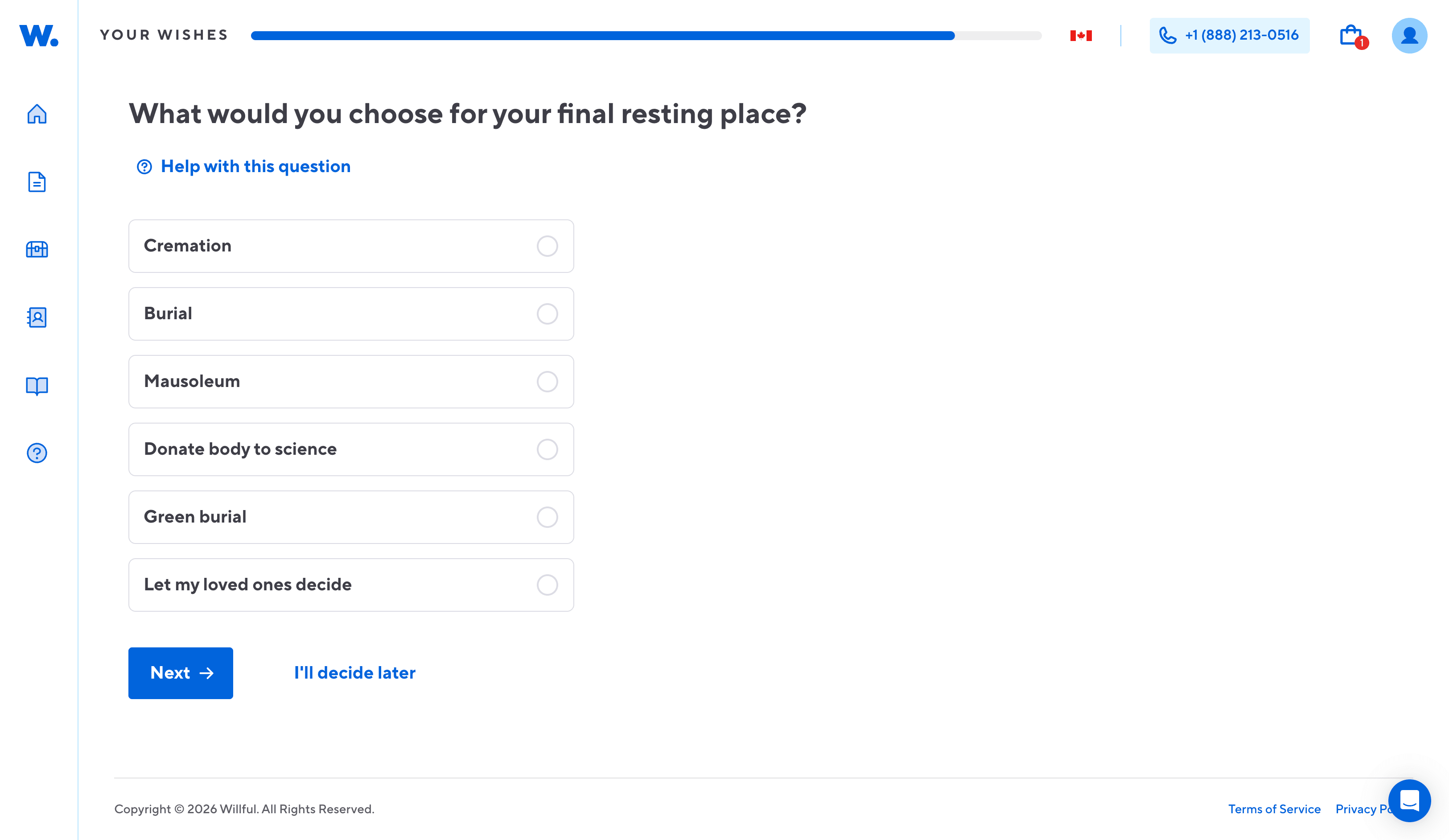
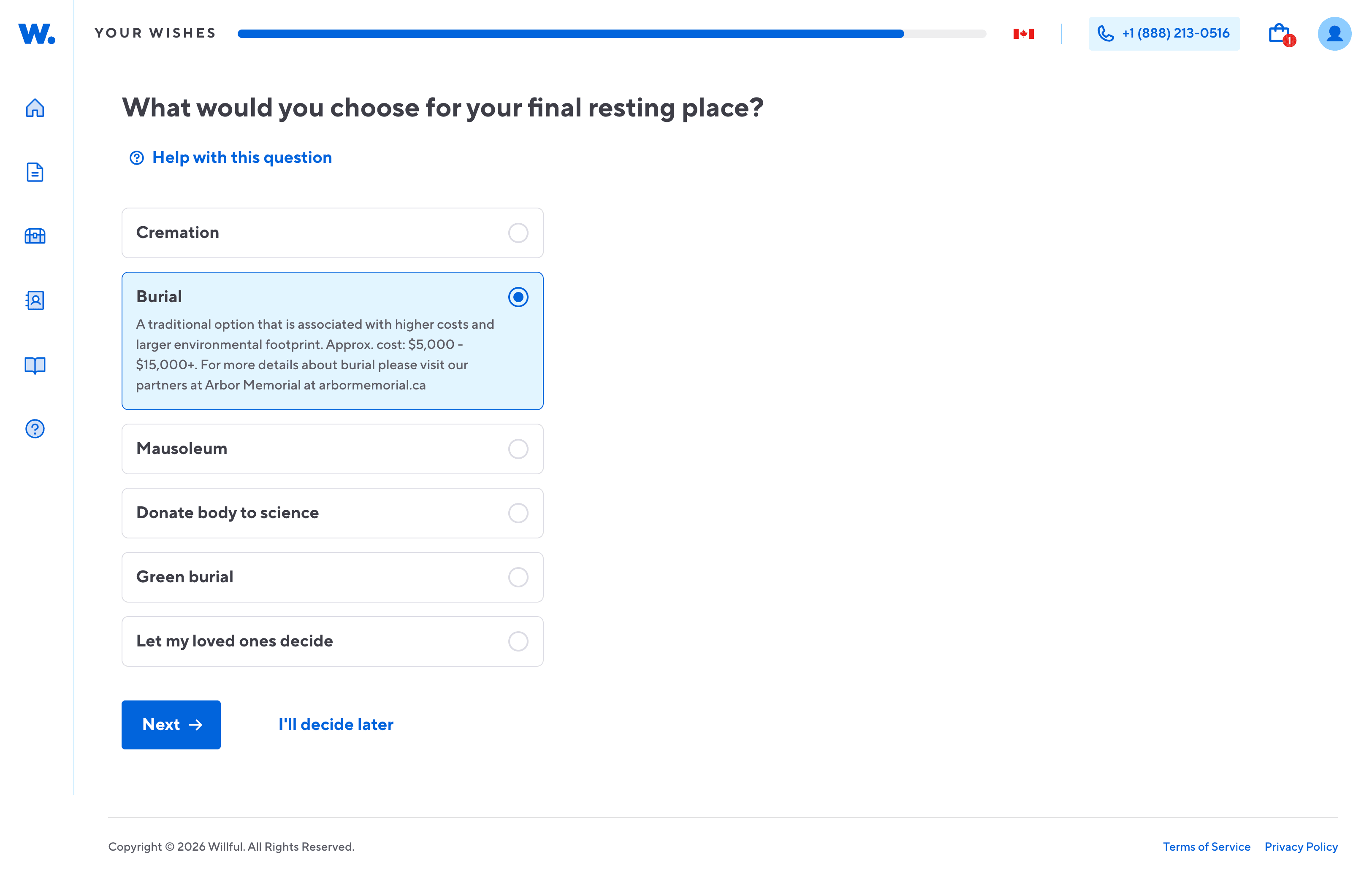
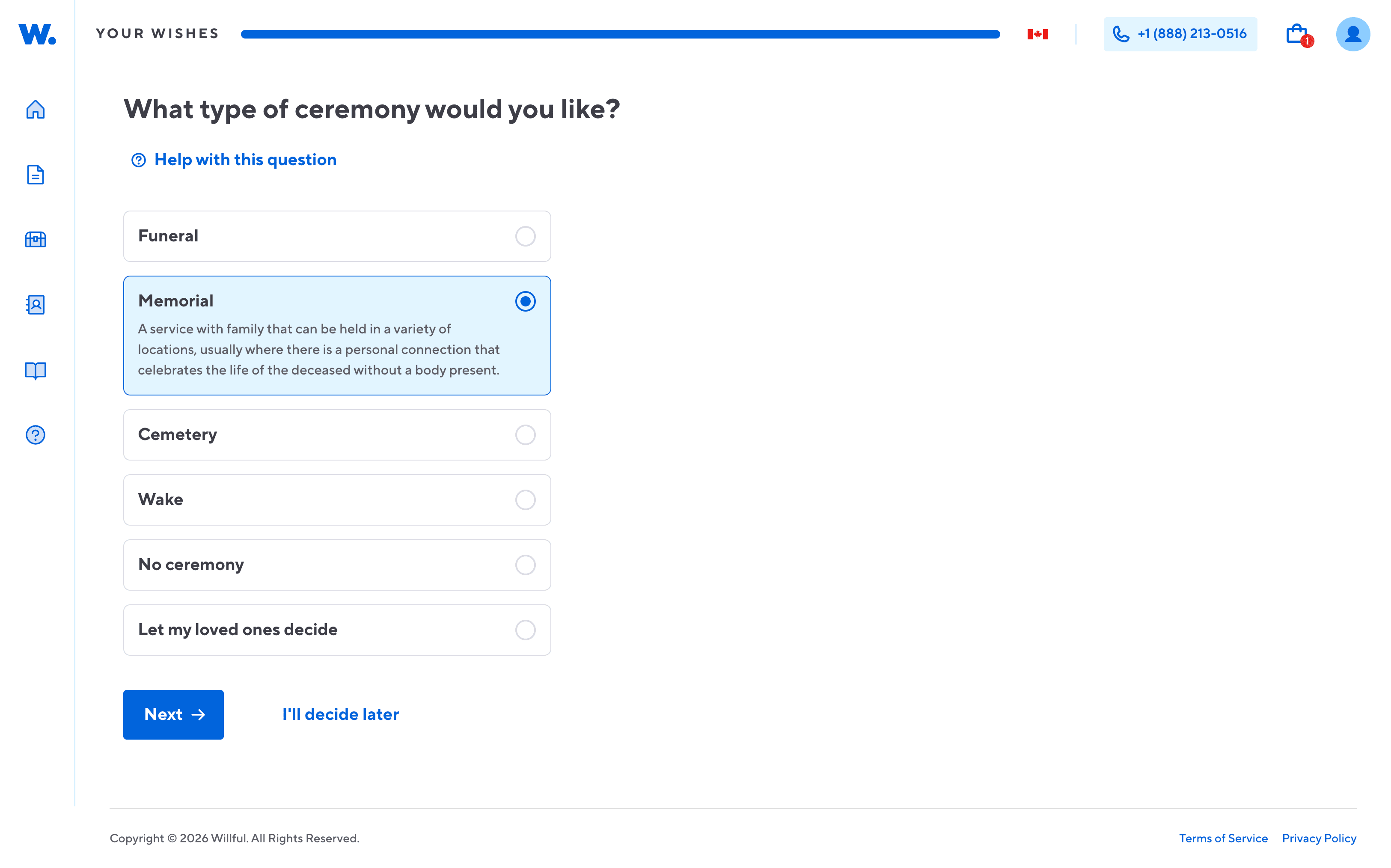
The first step in funeral planning is deciding your preferences regarding the handling of your remains and the type of service you want.
One option for your final resting place is a traditional burial, which involves purchasing a burial or cemetery plot. Another may be cremation, which can include a scattering ceremony or graveside service. Alternative methods may include eco-burials or donating your body to science.
When it comes to the service/ceremony, think about what feels right for you. Some people prefer a traditional funeral, while others lean toward a memorial service or a celebration of life that focuses on positive memories.
2. Research prices and plans
Funeral expenses can range from a few thousand dollars for a simple cremation to tens of thousands for a more elaborate service.
Start by estimating the costs associated with your chosen funeral wishes, including service fees, the purchase of a burial plot, and additional expenses like a memorial or reception.
To manage these costs, you can explore pre-paid funeral plans, which allow you to lock in prices. You may also consider funeral insurance to cover funeral costs without using your estate assets or family’s money.
What is funeral insurance?
Funeral insurance or end-of-life insurance is a type of permanent life insurance product.
A traditional permanent life insurance policy distributes an income replacement payment to your beneficiaries after you pass away. Beneficiaries can use these funds however they want.
On the other hand, funeral insurance distributes a lump sum payment to your beneficiary which must be used for your funeral services and associated costs.
What is the CPP death benefit?
If you contributed to the Canadian Pension Plan (CPP) for at least three years before passing away, your executor can apply for the CPP death benefit, which provides a one-time payment of $2,500 to help with your funeral costs.
Executors must apply for the benefit within 60 days of a person’s date of passing to receive this benefit.
3. Document your wishes
Once you’ve researched and settled on your plans, you should document your funeral and burial preferences in an online will or write them in a different document.
If you choose to document your wishes separately, include details about your chosen funeral service, the handling of your remains, and any other specific requests, such as songs, readings, or personal touches.

Write down your final wishes in one simple form.
Get free template →Free Funeral Planning Checklist
Using a checklist can help you stay organized and avoid overlooking key elements. Get your free funeral planning checklist now →
Remember to keep your will and other planning documents in a safe place and let your executor know where they are.
 Pro Tip
You can register your will and final wishes for free on the Willful Will Registry. The registry keeps a secure log of where your will is, just in case your executor forgets.
Can I change my funeral wishes after documenting them?
Yes, anytime you want to change your funeral wishes, you just need to edit the document you have them in.
If you documented your funeral wishes in your will, you can create an update through a codicil, amendment, or new will to document changes.
4. Plan your estate
Your funeral plan should align with your broader estate planning wishes.
An estate plan contains documents like your legal will, power of attorney documents, asset lists, funeral wishes, and more.
Services like Willful can help you get all these documents in place and save thousands compared to using a lawyer.
Learn more about end-of-life planning and your estate plan →
5. Communicate your wishes with your loved ones
As a final step, share your plans with loved ones and your chosen executor. Sharing your plans and final wishes will pre-emptively address any confusion your loved ones might have. It will also help ensure that everyone understands your wishes if your documents are ever lost.
If you purchased a funeral plan or insurance, those details should also be documented somewhere safe where your executor can access them when the time comes.
Document your final wishes with Willful
Pre-planning your funeral today can give peace of mind to you and your family members. With an online will platform like Willful, you can easily document your funeral wishes, pre-plan your funeral, and secure your estate plan.
Whether you need help outlining your preferences or understanding Canadian burial laws, Willful offers user-friendly tools to make estate and funeral planning easier and more affordable.

The easiest way to create your legal will in Canada.
Start today →This content has been reviewed by Canadian estate planning experts or legal professionals. Our editorial team is committed to ensuring the accuracy and currency of content.