
What Is an Estate Inventory? And Why Your Executor Will Thank You



If something happened to you, would your executor and/or loved ones know where to start?
One of the most important jobs of your executor, the person responsible for wrapping up your estate, is to track down everything you own and owe. That often means playing detective: waiting for mail to arrive, reviewing tax returns, calling financial institutions, and searching through stacks of paperwork.
An estate inventory changes that. It gives your executor a clear map so nothing gets missed.
What is an estate inventory?
An estate inventory is a detailed record of your assets and liabilities, and the key details and contacts that would help your executor wrap up your estate. Think of it as a map for your executor to track down everything they need to deal with: where you bank, any property you own, any loans or debts you have, your vehicles, and any other key details. It also includes contacts, like your financial advisor, mortgage broker, or insurance broker.
Willful’s improved Estate Inventory lets you go beyond a basic account list, helping you detail the type of asset ownership, key contacts, any debts associated with properties, and many more details. The result is a blueprint of your financial life, which can be stored alongside your will and put into action when you pass away.
What to include in an estate inventory?
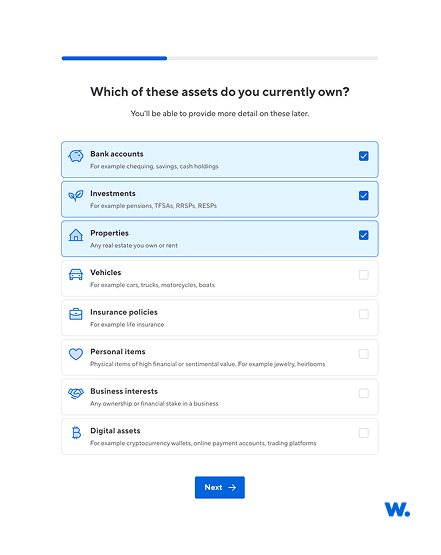
Your estate inventory should include your main assets and liabilities. You don’t need to detail all of your personal belongings; rather think of it as a map that can show your executor where you hold assets, what major physical assets you own, and the details needed to close down accounts. Willful’s estate inventory checklist allows you to document:
- Bank accounts: for example chequing accounts, savings, or cash holdings
- Investments: RRSPs, TFSAs, pension accounts, RESPs, RRIFs, non-registered accounts, stocks, and bonds
- Properties: any real estate you own or rent
- Vehicles: cars, motorcycles, boats
- Insurance policies
- Personal items: Physical items of high financial or sentimental value
- Business interests: Any ownership or financial stake in a business
- Digital assets: Cryptocurrency
- Debts: Mortgages, loans, lines of credit, credit cards, student loans, or money owed to individuals
For each of these categories, you can add supporting details, including:
- Ownership type - sole, joint, or other
- Debt details - issuer, maturity date, and other details
- Key contacts - financial advisor, insurance broker
- Insurance policy details - policy type, amount, coverage amount, and beneficiaries
- Additional notes to support your executor
- Estimated value - this can support tax minimization and give a clear overview of the value of your estate
The estate inventory is a high-level overview of your assets and liabilities. It’s not a list of account numbers and passwords. In order to deal with your accounts, your executor would contact the issuing institution to deal with it directly, so it’s not necessary to include detailed account numbers and passwords.
Learn more about why you should never include passwords in your will
Why does an estate inventory matter?
Here’s why creating an estate inventory is worth your time:
- It helps your decision-makers and family. In the event you’re incapacitated or you pass away, they know exactly what to look for and where, which means there’s no guesswork and no surprises.
- It makes sure assets aren’t missed. Without an estate inventory, your loved ones may not find all of your assets, which means money that should go to your loved ones may be overlooked.
- It reveals gaps in your plan. For example, if you’re a parent but you don’t have a life insurance policy, this might help you identify that gap and take action.
An estate inventory is a living document, not a one-time task. Your assets can change year to year, so reviewing it annually and keeping it current means your estate plan reflects your life as it actually is.
How Willful's Estate Inventory works
Willful’s Estate Inventory guides you through documenting your assets and liabilities, and the key details associated with each. We start by asking you which types of assets you own, so we can include the correct categories in your estate inventory. Next, you’ll be prompted with a series of questions about each asset or liability so you can fill in the relevant details your executor would need.
For example, if you’re adding your home, Willful asks you to detail:
- Type of property (primary, rental)
- Address
- Ownership type (sole, joint)
- Any mortgage associated with the property, and the details of the mortgage
- Estimated current value
- Mortgage broker or other key contact
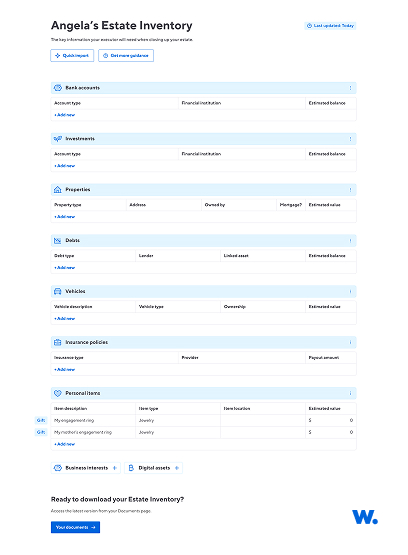
Once you’ve added your assets, any debts, and the estimated value for each, Willful generates a PDF document listing each item in detail. It also includes an estate value summary.
Right now, Willful’s Estate Inventory is available to Premium and Premium x2 plan holders.
Estate inventory vs. asset list — what's the difference?
Willful’s Estate Inventory replaces our Asset and Liability list, which was a basic listing of your accounts. The Estate Inventory is more detailed and includes key contacts, current values, and other key details that were missing from the asset list. This is a much more comprehensive document that provides helpful additional details for your executor.
If you’ve already created an asset list with Willful, you can keep that document, or you can create your Estate Inventory for a more comprehensive overview.
Ready to give your executor a head start? Start your estate inventory by signing up for Willful, or logging into your account. It takes just a few minutes to get started, but it'll save your loved ones countless hours of stress.

Give your executor a head start.
Start your estate inventory →