

![Women are Canada's default crisis managers [Estate Planning]](https://cdn.prod.website-files.com/5ed7ba1d077e064136beff9e/69a8593e749f8db4def386b8_v2%20International%20Women%27s%20Day%20Report%202026.jpeg)
When a family faces a health emergency or a death, someone has to step in.
Someone talks to doctors. Someone calls the bank. Someone files paperwork, tracks down passwords, and keeps things moving when everything feels overwhelming.
Ahead of International Women’s Day, we looked at anonymized data from more than 85,000 wills and 121,000 incapacity planning documents created on Willful between February 2024 and January 2026.
A clear pattern emerged: across roles tied to medical decisions, financial management, and estate settlement, women are appointed more often than men.
Who Canadians choose to handle their estate
An executor is responsible for wrapping up someone’s affairs after they pass away. That can include closing accounts, managing assets, filing final tax returns, and distributing inheritances.
In our data:
- 53% of Canadians name a woman as executor
- 47% name a man
The difference is consistent across generations, with women slightly more likely to be appointed in every age group.
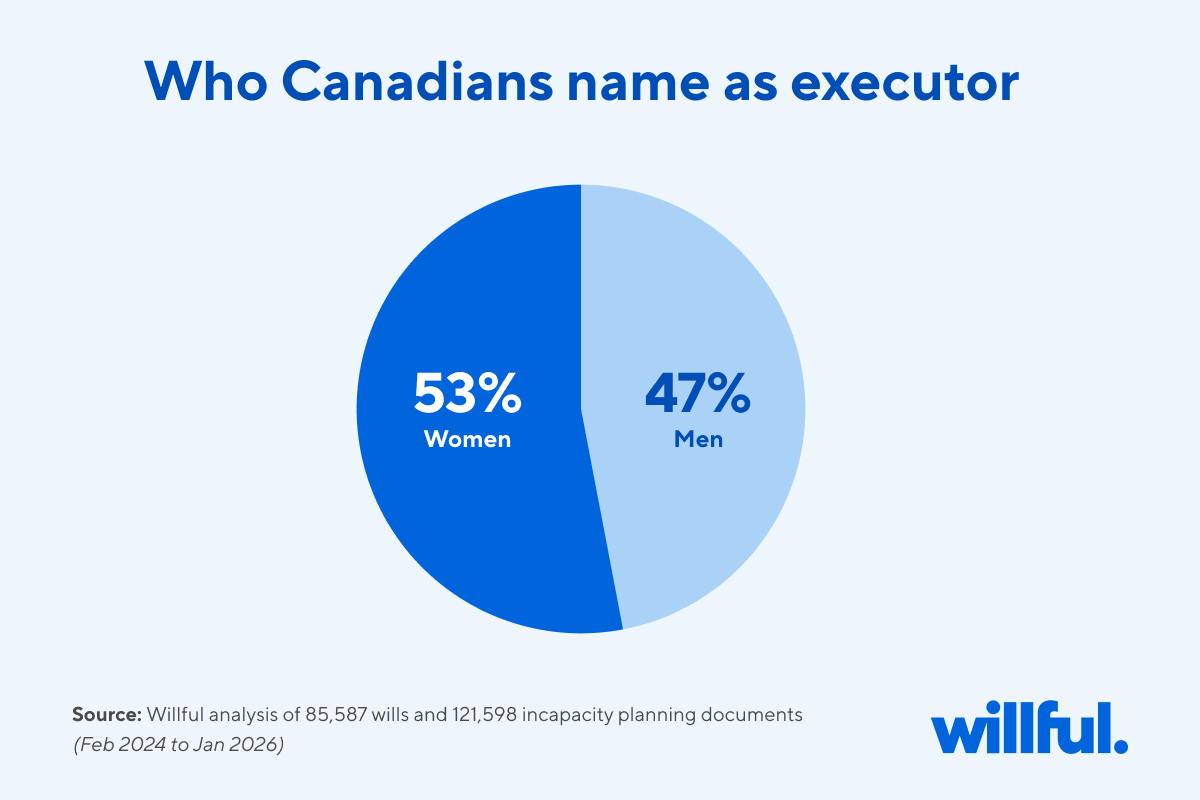
It is a modest gap, but across tens of thousands of families, it represents a meaningful trend.
In a health crisis, women are more often chosen
The pattern is even clearer when we look at medical decision-making.
When Canadians choose someone to make healthcare decisions if they become incapacitated:
- 55% name a woman
- 45% name a man
Among males, the difference is significant:
- 86% of men name a woman to make medical decisions on their behalf
- 14% name a man
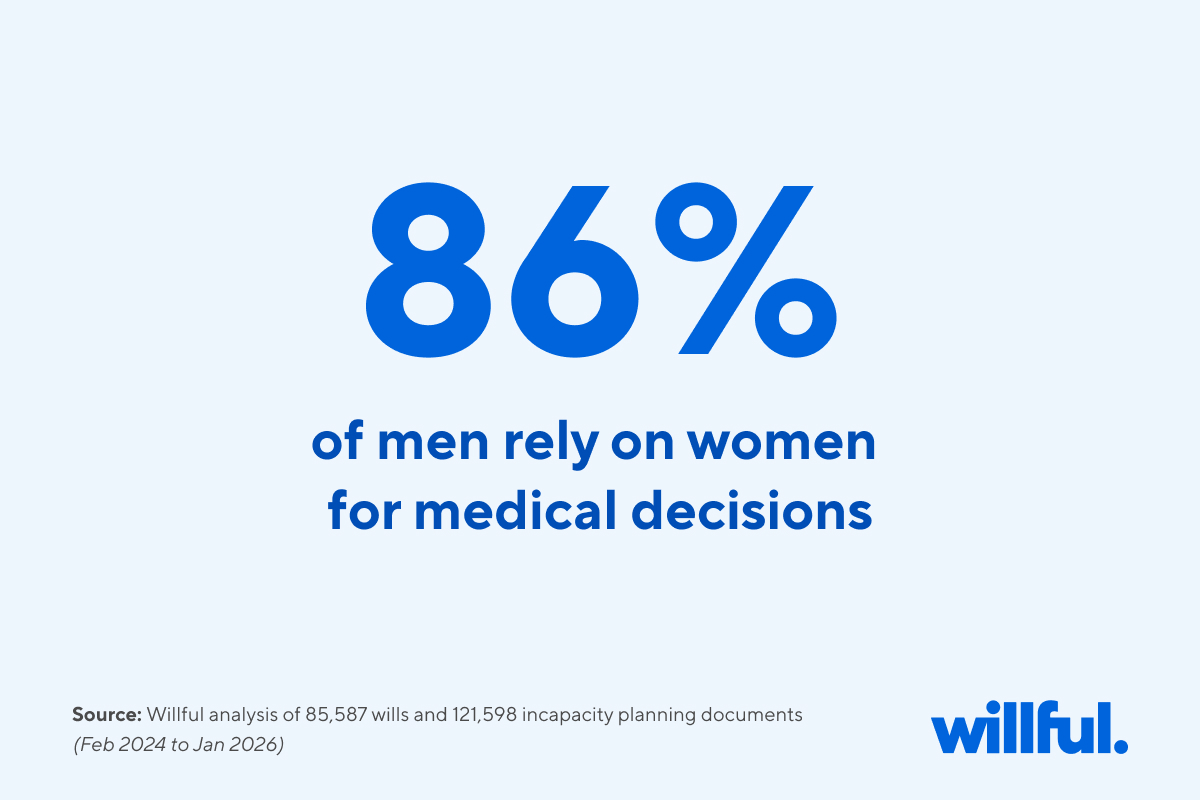
This aligns with what many families already experience day-to-day. Women are often seen as the organizers, the communicators, the ones who track details and advocate in complex systems.
Women are frequently named as the backup
We also looked at alternate decision-makers.
When a man is named as primary executor, 57% of backup executors are women.
When a man is named as primary for medical decisions, 64% of backups are women.

Even when not first in line, women are often the second person families rely on.
When there is no spouse involved, families still turn to women
The trend continues when people name someone other than a spouse or partner.
Among non-spouse medical decision-makers:
- 63% of siblings chosen are sisters
- 63% of friends chosen are women
- 71% of parents chosen are mothers
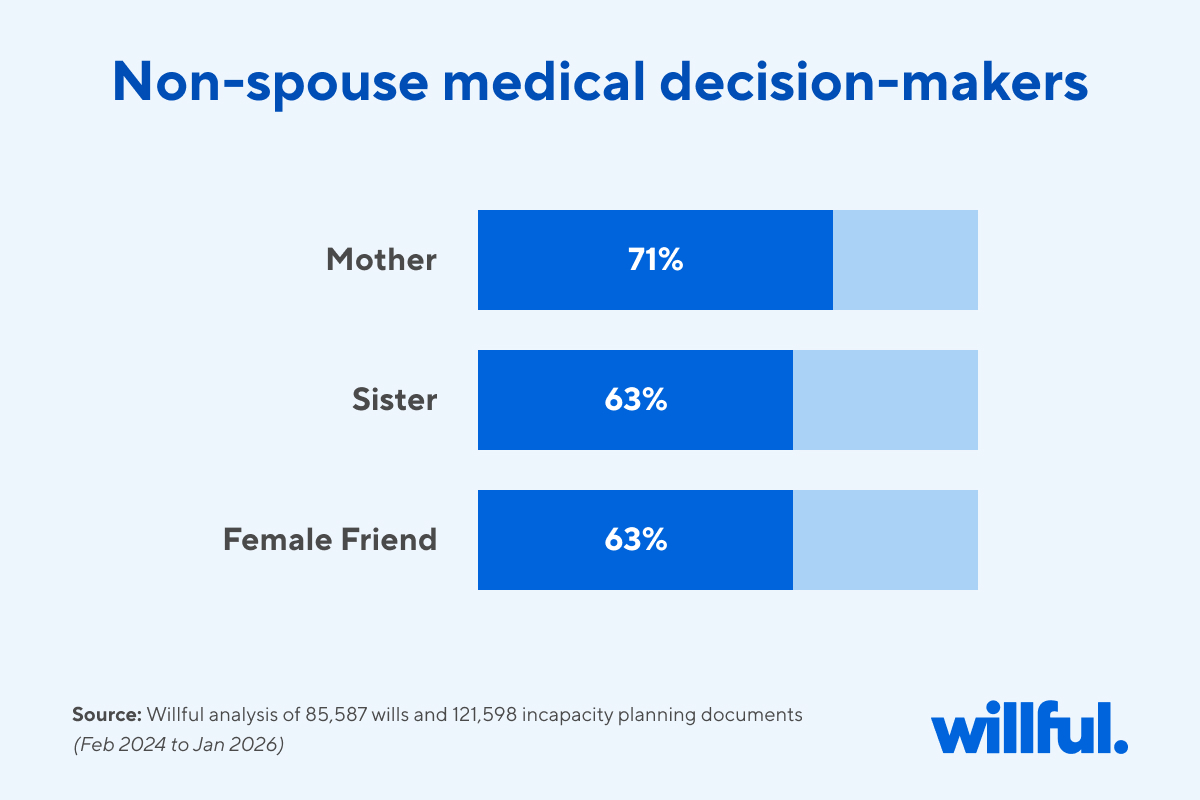
When Canadians need someone to step in, they consistently lean toward women across different relationships.
Responsibility and benefit are not always aligned
Managing someone’s finances or medical care during incapacity takes time. So does serving as executor. These roles can involve detailed administrative work and emotionally difficult conversations.
We looked at whether women appointed to these roles were also named as beneficiaries.
When a woman is named to make medical decisions, 34% are not listed as beneficiaries in the related will.
When a woman is named to manage finances during incapacity, 33% are not the primary beneficiary.
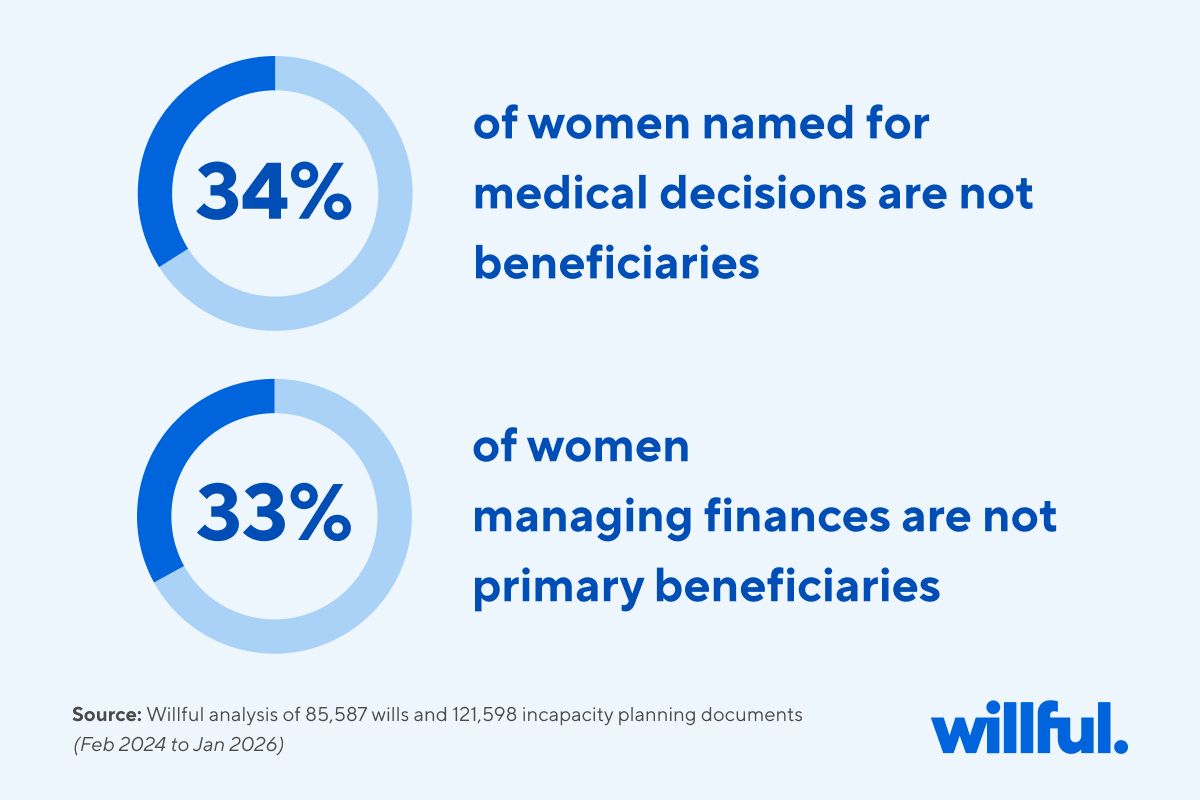
Often these women are sisters, daughters, or friends helping someone they care about. Executors may be entitled to compensation under provincial guidelines, but many choose not to claim it. Healthcare decision-makers are typically unpaid.
The data highlights how often women carry significant responsibility during a crisis, regardless of financial benefit.
What this means for families
Estate planning documents are practical tools. They assign authority, set expectations, and legally permit someone to carry out your last wishes or act on your behalf. They shape who gets the phone call when something goes wrong.
For many families, that phone call will go to a woman.
If you are creating or updating your documents, it is worth thinking through what that responsibility looks like in real life.
- Have you shared your decisions with the people you appointed?
- Do they understand the scope of the role?
- Do they know where documents are stored?
- Would they feel prepared to act quickly if needed?

Pro Tip
A current will and power of attorney can reduce legal friction. An organized estate inventory can save hours of stress. A straightforward conversation can prevent confusion later.
These small steps make a difficult moment more manageable for the person stepping in.
International Women’s Day is a useful prompt to review your documents and your assumptions. Who have you named? Why? Is the responsibility shared in a way that feels thoughtful and fair?
About the data
This analysis is based on anonymized, aggregated platform data from 85,587 wills and 121,598 incapacity planning documents created on Willful between February 1, 2024 and January 31, 2026. All results reflect behaviour on our platform during that period.
If it has been a while since you reviewed your will or incapacity documents, this week is a good time to revisit them.
Look at who you have appointed. Let them know. Make sure they have what they need.
When a crisis happens, preparation matters.